If you own a desktop 3D printer, you have almost certainly printed with PLA or PETG — or both. They are the two most widely used FDM filaments in the world, and for good reason: they are affordable, widely available, and compatible with virtually every consumer printer on the market. Yet they serve different purposes. PLA is the go-to for beautiful, easy prints; PETG is the workhorse for parts that need to survive real-world use. This guide breaks down every meaningful difference so you can choose with confidence.
If you are brand-new to 3D printing, start with PLA. Once you are comfortable with your machine, try PETG for your first functional part.
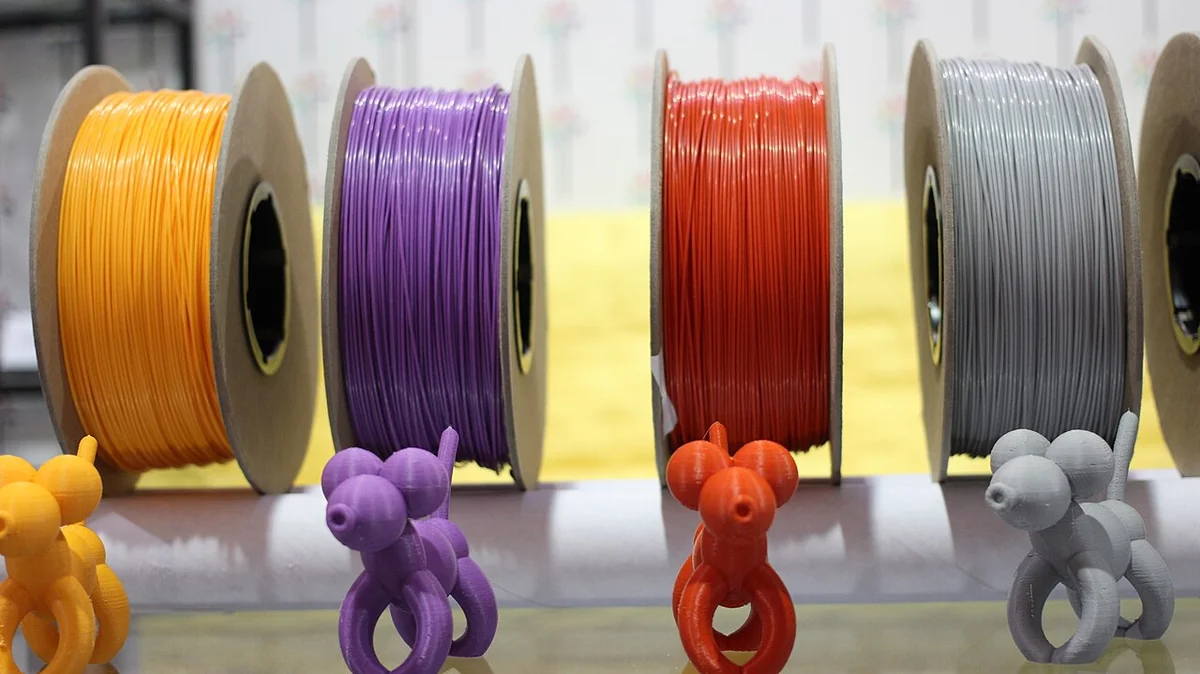
Print settings compared
The table below summarises typical slicer settings for each material. Always check your filament manufacturer's datasheet first — exact values vary between brands.
| Parameter | PLA | PETG |
|---|---|---|
| Nozzle temperature | 190–220 °C | 220–250 °C |
| Bed temperature | 50–60 °C | 70–85 °C |
| Print speed | 40–100 mm/s | 30–70 mm/s |
| Part cooling fan | 100 % | 30–60 % |
| Retraction (direct drive) | 0.5–1.5 mm | 1.0–2.5 mm |
| Retraction (Bowden) | 4–6 mm | 5–7 mm |
| Enclosure needed | No | No |
Key takeaway: PETG prints hotter, slower, and with less cooling. PLA is more forgiving and lets you push speed.
Mechanical properties
PLA is a stiff, rigid material. It has a higher tensile modulus than PETG, which means it deforms less under load — ideal for parts that must hold their shape precisely. However, that stiffness comes at a price: PLA is brittle. When it fails, it snaps suddenly rather than bending.
PETG, by contrast, is tougher and more impact-resistant. It can absorb energy and flex slightly before breaking. If you drop a PETG part on concrete, it is far more likely to survive than the same part printed in PLA.
| Property | PLA | PETG |
|---|---|---|
| Tensile strength | ~50–60 MPa | ~45–55 MPa |
| Stiffness (modulus) | Higher | Lower (more flexible) |
| Impact resistance | Low (brittle) | High (tough) |
| Elongation at break | ~3–6 % | ~15–25 % |
Rule of thumb: if the part could be dropped, snapped, or stressed repeatedly, PETG is the safer choice.
Temperature resistance
This is one of PLA's biggest weaknesses. PLA has a glass-transition temperature (Tg) of roughly 55–60 °C, and it begins to soften noticeably around 50 °C. Leave a PLA part on a car dashboard in summer and you will come back to a puddle of plastic.
PETG handles heat significantly better, with a Tg around 80 °C and real-world softening starting around 70–80 °C. It is not a high-temperature material (ABS, ASA, and PC are better for that), but it comfortably survives environments that would destroy PLA.
Bottom line: any part that may encounter warmth — electronics enclosures, lamp shades, kitchen tools, engine-bay clips — should be PETG at minimum, not PLA.
Chemical resistance
PETG wins this category clearly. It is resistant to a wide range of acids, alkalis, and many common solvents. Certain grades of PETG are FDA-compliant for food contact (the same family of plastic used for water bottles and food containers).
PLA is a bio-based polyester. It degrades slowly in the presence of moisture and certain chemicals, and it is generally not recommended for prolonged food contact — not because the plastic itself is toxic, but because the porous surface of FDM prints harbours bacteria, and PLA cannot withstand the hot-water dishwasher cycles needed for proper sanitisation.
For food-adjacent applications (cookie cutters, fridge organisers, dry-food scoops), food-safe PETG with a food-safe coating or single-use PLA are acceptable compromises.
UV & outdoor use
Neither PLA nor PETG is an outdoor champion — for long-term UV exposure, ASA is the material of choice. That said, PETG fares slightly better than PLA outdoors. It resists moisture better, does not soften in warm weather as easily, and degrades somewhat more slowly under UV light.
PLA in direct sunlight will become brittle and discoloured over months. It also absorbs moisture, which can lead to cracking.
Recommendation: for short-term outdoor use (a few months), PETG is acceptable. For permanent outdoor installations, switch to ASA or apply a UV-resistant coating.
Ease of printing
PLA is the easiest filament to print. It has a wide temperature window, minimal warping, excellent bridging performance, and produces very little stringing with default retraction settings. It is the universal "first filament" recommendation for beginners.
PETG requires more tuning. It is prone to stringing because of its higher viscosity and printing temperature. Dialling in retraction, temperature, and speed takes a few test prints. Overhangs are slightly worse than PLA because you cannot blast the fan at 100 % without losing layer adhesion.
That said, PETG is still considered an easy-to-print engineering material. It does not warp like ABS, does not require an enclosure, and modern slicer profiles handle most of the tuning for you.
Difficulty ranking: PLA (beginner) < PETG (easy-intermediate) < ABS/ASA (intermediate) < Nylon/PC (advanced).
Bed adhesion
PLA sticks well to almost any build surface — PEI, glass, painter's tape, BuildTak — without drama. Releasing the print is usually as simple as waiting for the bed to cool.
PETG sticks too well to some surfaces, particularly bare glass and smooth PEI sheets. It can bond so strongly that removing the print tears chunks out of your build plate. This is a real and common issue.
How to protect your bed when printing PETG:
- Use a textured PEI sheet — PETG releases cleanly from textured surfaces.
- Apply a thin layer of glue stick or hairspray on glass beds. The glue acts as a release agent, not an adhesive.
- Increase Z-offset slightly so the first layer is not over-squished into the glass.
- Never print PETG directly on bare smooth PEI or bare borosilicate glass without a separator.
Post-processing
PLA is the king of post-processing. It sands easily, accepts spray paint and acrylic paint well, and can even be vapour-smoothed with certain solvents (ethyl acetate, though less common than the acetone/ABS workflow). For miniatures, cosplay props, and display pieces, PLA is the clear winner.
PETG is harder to finish. Its toughness makes sanding more tedious — it tends to gum up sandpaper rather than powdering cleanly. Paint adhesion is weaker without proper surface preparation (scuffing + primer). It cannot be vapour-smoothed in any practical way.
If the part will be painted or displayed: PLA. If the part will be used as-is: PETG's natural semi-glossy finish often looks fine without any finishing.
Cost comparison
In 2026, PLA and PETG are priced almost identically. A standard 1 kg spool of reputable-brand filament costs between 15 and 25 € for either material. Premium and specialty colours may cost more, but the base-price gap that once existed has essentially vanished.
Bulk purchasing (5–10 kg) brings the per-kilo price down to around 12–18 € for both. Budget brands can go as low as 10 €/kg, though quality control varies.
Cost is no longer a deciding factor between PLA and PETG. Choose based on the properties you need.
When to choose PLA
- Decorative objects — vases, lithophanes, figurines, art pieces. PLA's sharp detail and easy post-processing shine here.
- Prototyping — fast, cheap, and reliable. PLA is perfect for form-check prototypes that will never see real loads.
- Miniatures and tabletop gaming — nothing beats PLA at 0.08–0.12 mm layer heights for tiny, detailed models.
- Beginners — learning the ropes with PLA eliminates material-related variables so you can focus on dialling in your printer.
- Cosplay and props — lightweight, easy to sand and paint, and strong enough for wearable armour pieces.
- Classroom and educational use — PLA is derived from plant starch (corn), produces minimal fumes, and is compostable in industrial facilities.
When to choose PETG
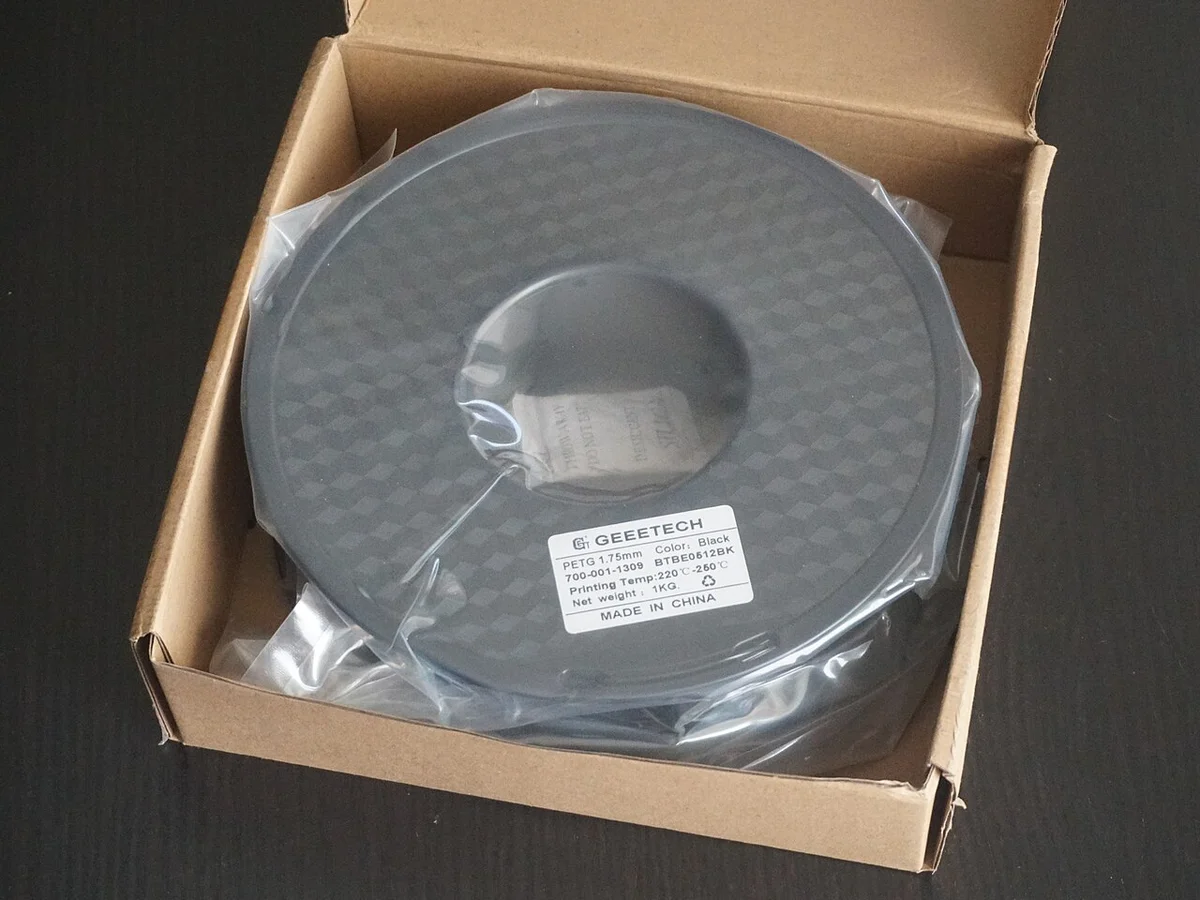
- Functional parts — brackets, mounts, jigs, clips, enclosures. PETG's toughness and impact resistance make it reliable for mechanical use.
- Moderate-heat environments — electronics housings, LED lamp covers, anything near a warm appliance. PETG comfortably handles 70–80 °C.
- Short-term outdoor use — garden stakes, mailbox parts, bird feeders. PETG lasts longer than PLA when exposed to weather.
- Food proximity — utensil holders, fridge bins, dry-food scoops. Food-safe PETG grades exist and the material can survive hot-water cleaning.
- Parts subject to vibration or impact — drone frames, tool holders, protective covers. PETG absorbs energy instead of shattering.
- Chemical exposure — containers or housings that may contact cleaning agents, oils, or mild solvents.
Verdict & recommendation
There is no single "better" filament — only the right filament for the job at hand. Here is the simplest way to decide:
| Ask yourself… | Answer |
|---|---|
| Will the part be purely decorative or a prototype? | PLA |
| Will the part bear loads or take impacts? | PETG |
| Could the part get warmer than 50 °C? | PETG |
| Will you sand or paint the part? | PLA |
| Will the part contact food or chemicals? | PETG |
| Are you a beginner or want the easiest print? | PLA |
Our recommendation: keep both on your shelf. A spool of PLA and a spool of PETG together cover the vast majority of everyday printing needs. With both materials costing roughly the same in 2026, there is no reason not to have each one ready to go.